



ADC Linkers
Antibody-drug conjugates linkers
Antibody-drug conjugates (ADCs) consist of a desirable monoclonal antibody, an active cytotoxic drug and an appropriate linker. An appropriate linker between the antibody and the cytotoxic drug provides a specific bridge, and thus helps the antibody to selectively deliver the cytotoxic drug to tumor cells and accurately releases the cytotoxic drug at tumor sites. In addition to conjugation, the linkers maintain ADCs’ stability during the preparation and storage stages of the ADCs and during the systemic circulation period.
The ADCs currently undergoing clinical evaluation contain linkers are mostly classified into two categories: cleavable and noncleavable. Cleavable linkers rely on processes inside the cell to liberate the toxin, such as reduction in the cytoplasm, exposure to acidic conditions in the lysosome, or cleavage by specific proteases within the cell. Noncleavable linkers require proteolytic degradation of the antibody portion of the ADC for release of the cytotoxic molecule, which will retain the linker and the amino acid by which it was attached to the antibody.
The selection of linker is target dependent, based on the knowledge of the internalization and degradation of the antibody-target antigen complex, and a preclinical in vitro and in vivo activity comparison of conjugates. Moreover, the choice of a linker is also influenced by which cytotoxin is used, as each molecule has different chemical constraints, and frequently the drug structure lends itself to a specific linker.
ADC Linkers Isoform Specific Products
-
ADC Linkers
(528)
View all products
-
Cleavable Linker
(445)
View all products
-
Non-cleavable Linker
(205)
View all products
-
Acid Cleavable Linker
(7)
View all products
-
Disulfide Cleavable Linker
(126)
View all products
-
Protease Cleavable Linker
(83)
View all products
-
Glycosidase Cleavable Linker
(6)
View all products
-
Phosphatase Cleavable Linker
(1)
View all products
All Product Categories
-
ADC Linkers Related Products (1200)
Related Products (1200)

-
ADC Linkers Isoform Comparison
-
BL4-5
 0 ImagesCat. No.: HY-185799CAS No.: 2758876-17-2BL4-5 is a branched linker intermediate of antibody-drug conjugate linkers (ADC Linkers), which is applicable to research related to ADC synthesis.
-
H-L-Orn(N3)-OH hydrochloride
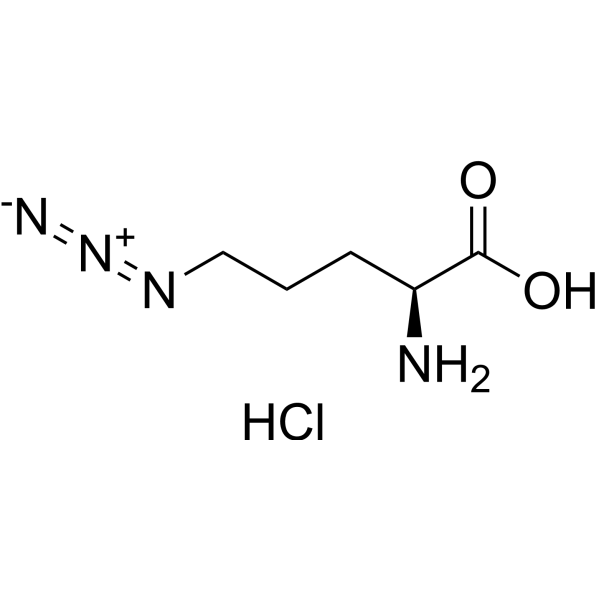 0 ImagesCat. No.: HY-151694CAS No.: 1782935-10-7H-L-Orn(N3)-OH (hydrochloride) is a click chemistry reagent containing an azide group. H-L-Orn(N3)-OH (hydrochloride) can be used for the research of various biochemical. It contains an azide group and can undergo copper-catalyzed azide-alkyne cycloaddition (CuAAc) with molecules containing alkyne groups. It can also undergo ring strain-promoted alkyne-azide cycloaddition (SPAAC) with molecules containing DBCO or BCN groups.
-
Boc-D-Lys(N3)-OH (CHA)
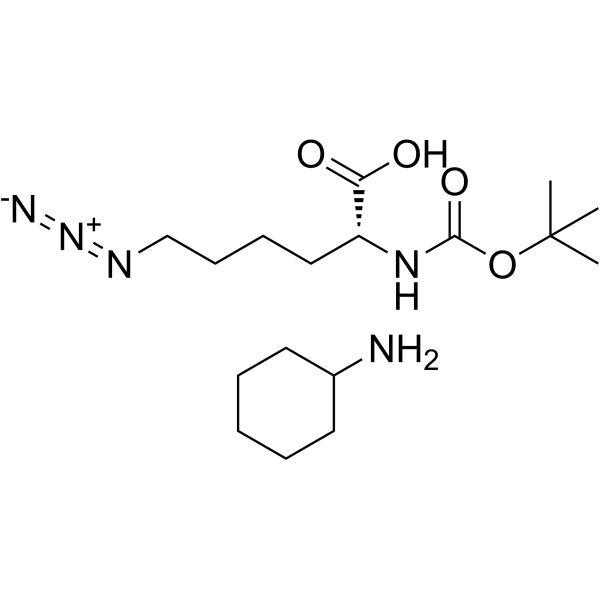 0 ImagesCat. No.: HY-151703ACAS No.: 1858224-39-1Boc-D-Lys(N3)-OH CHA is a click chemistry reagent containing an azide group. Click chemistry has great potential for use in binding between nucleic acids, lipids, proteins, and other molecules, and has been used in many research fields because of its beneficial characteristics, including high yield, high specificity, and simplicity. It contains an azide group and can undergo copper-catalyzed azide-alkyne cycloaddition (CuAAc) with molecules containing alkyne groups. It can also undergo ring strain-promoted alkyne-azide cycloaddition (SPAAC) with molecules containing DBCO or BCN groups.
-
(2S,4R)-Fmoc-L-Pro(4-N3)-OH
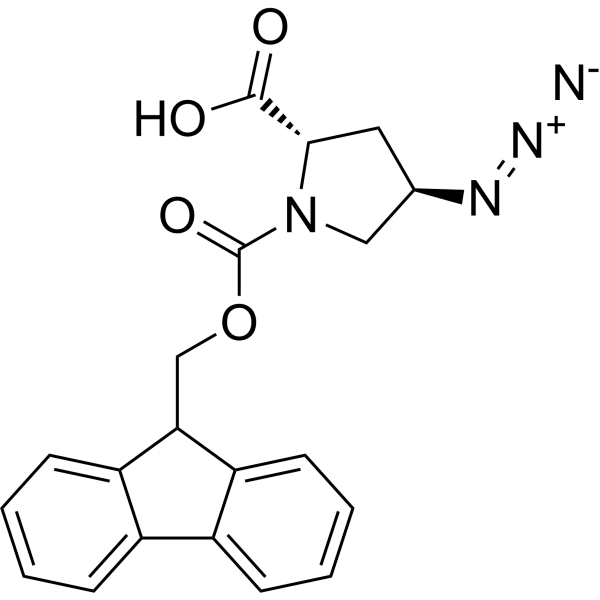 0 ImagesCat. No.: HY-151850CAS No.: 702679-55-8(2S,4R)-Fmoc-L-Pro(4-N3)-OH is a click chemistry reagent containing an azide. (2S,4R)-Fmoc-L-Pro(4-N3)-OH is a click chemistry reagent, it contains an Azide group and can undergo copper-catalyzed azide-alkyne cycloaddition reaction (CuAAc) with molecules containing Alkyne groups. It can also undergo strain-promoted alkyne-azide cycloaddition (SPAAC) reactions with molecules containing DBCO or BCN groups.
-
Boc-D-Aza-OH CHA
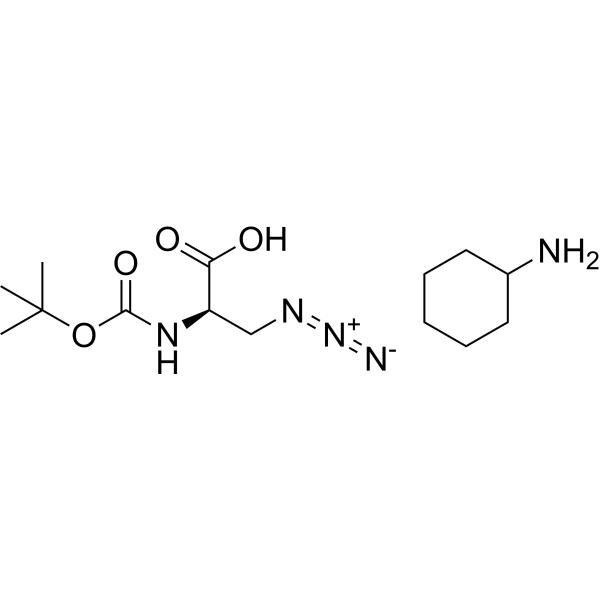 0 ImagesCat. No.: HY-W419403CAS No.: 2098496-96-7Boc-D-Aza-OH (CHA) is a click chemistry reagent. Click chemistry has great potential for use in binding between nucleic acids, lipids, proteins, and other molecules, and has been used in many research fields because of its beneficial characteristics, including high yield, high specificity, and simplicity. It contains an azide group and can undergo copper-catalyzed azide-alkyne cycloaddition (CuAAc) with molecules containing alkyne groups. It can also undergo ring strain-promoted alkyne-azide cycloaddition (SPAAC) with molecules containing DBCO or BCN groups.
-
(2S,4S)-H-L-Pro(4-N3)-OH hydrochloride
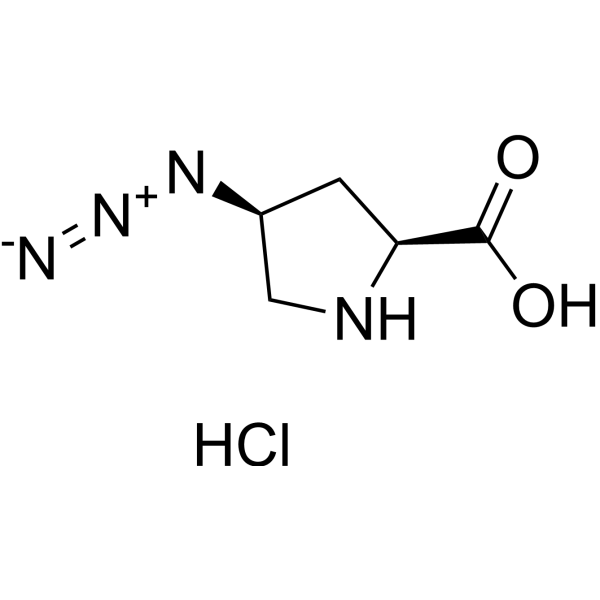 0 ImagesCat. No.: HY-151865A(2S,4S)-H-L-Pro(4-N3)-OH (hydrochloride) is a click chemistry reagent. Click chemistry has great potential for use in binding between nucleic acids, lipids, proteins, and other molecules, and has been used in many research fields because of its beneficial characteristics, including high yield, high specificity, and simplicity. It contains an azide group and can undergo copper-catalyzed azide-alkyne cycloaddition (CuAAc) with molecules containing alkyne groups. It can also undergo ring strain-promoted alkyne-azide cycloaddition (SPAAC) with molecules containing DBCO or BCN groups.
-
4-Pentynoyl-Val-Ala-PAB-PNP
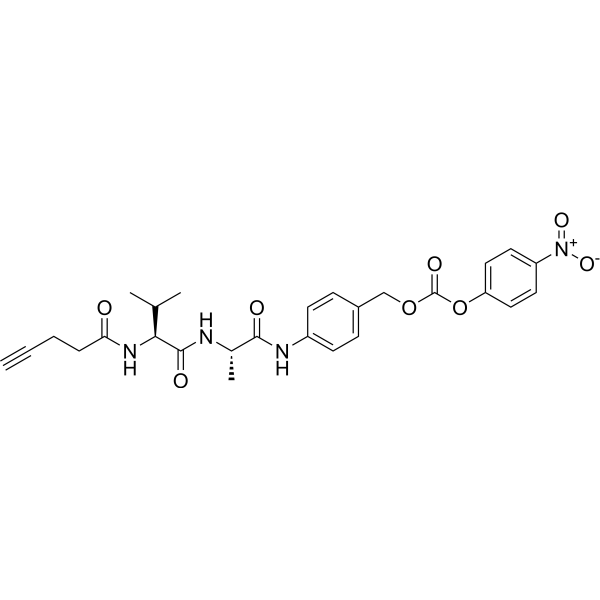 0 ImagesCat. No.: HY-151740CAS No.: 1956294-76-04-Pentynoyl-Val-Ala-PAB-PNP is a cleavable ADC linker, that has been used to synthesis cryptophycin conjugates. 4-Pentynoyl-Val-Ala-PAB-PNP is a click chemistry reagent, it contains an Alkyne group and can undergo copper-catalyzed azide-alkyne cycloaddition (CuAAc) with molecules containing Azide groups.
-
Mal-PEG2-CH2COOH
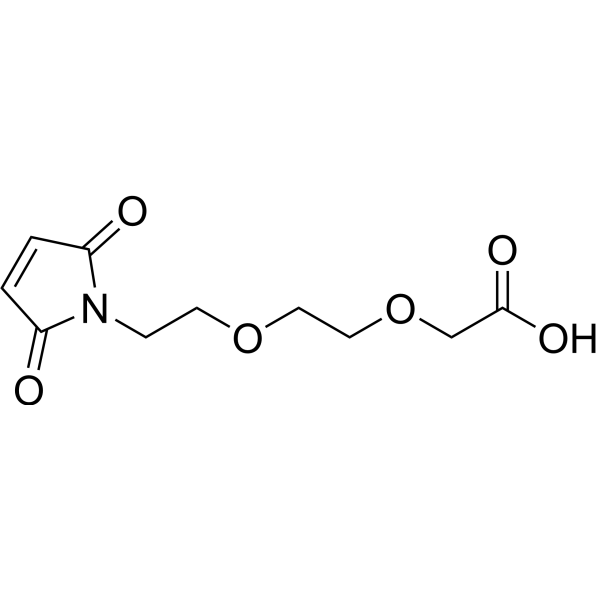 0 ImagesMal-PEG2-CH2COOH is an ADC linker used in the synthesis of antibody-drug conjugates (ADCs).
-
endo-BCN-Fmoc-L-Lysine
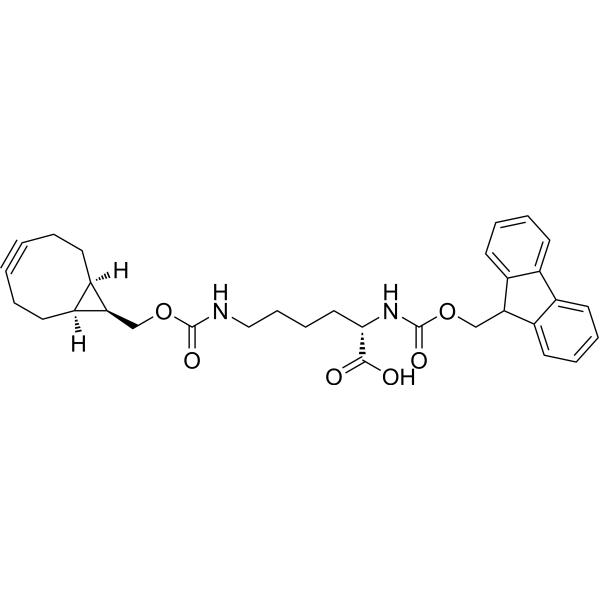 0 ImagesCat. No.: HY-W540023CAS No.: 1493802-95-1Endo-BCN-Fmoc-L-Lysine is a linker containing the lyophilic bidentate macrocyclic ligand endo-BCN, which can further synthesize macrocyclic complexes. In click chemistry, endo-BCN can react with molecules containing azide groups to form stable triazoles in the absence of catalysts.
-
Z-D-Dbu(N3)-OH
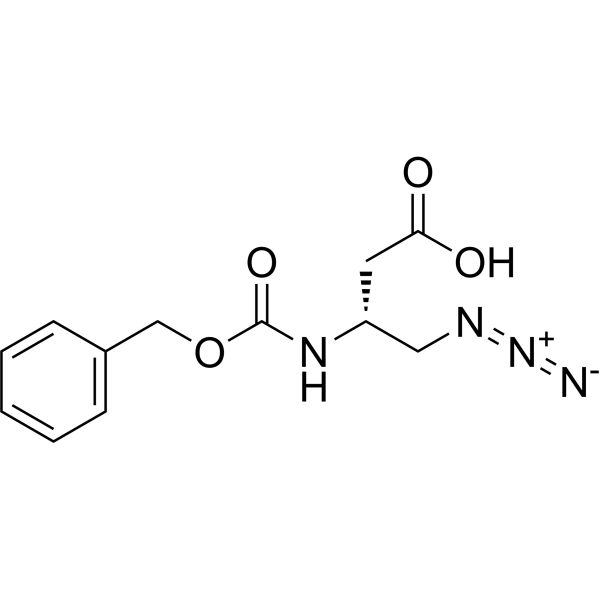 0 ImagesCat. No.: HY-151732CAS No.: 1931958-82-5Z-D-Dbu(N3)-OH is a click chemistry reagent containing an azide group. Z-D-Dbu(N3)-OH can be used for the research of various biochemical. It contains an azide group and can undergo copper-catalyzed azide-alkyne cycloaddition (CuAAc) with molecules containing alkyne groups. It can also undergo ring strain-promoted alkyne-azide cycloaddition (SPAAC) with molecules containing DBCO or BCN groups.
-
Fmoc-L-Lys(Pryoc)-OH
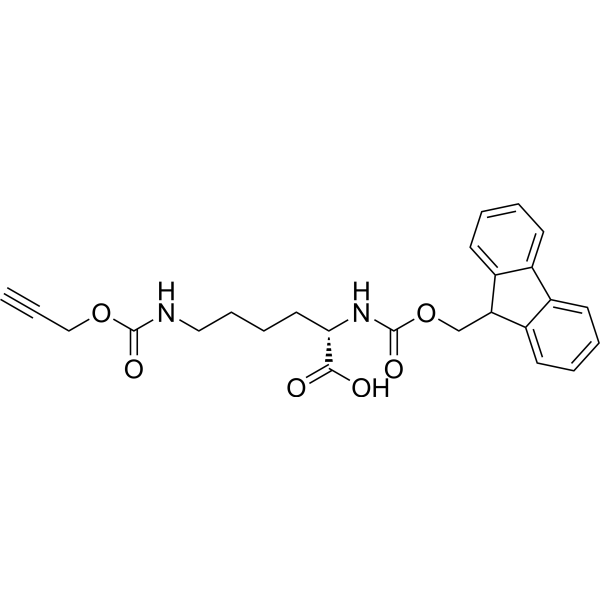 0 ImagesCat. No.: HY-151695CAS No.: 1584133-25-4Synonyms: N2-Fmoc-N6-[(propargyloxy)carbonyl]-L-lysineFmoc-L-Lys(Pryoc)-OH (N2-Fmoc-N6-[(propargyloxy)carbonyl]-L-lysine) is a click chemistry reagent containing an azide group.
-
DACN(Ms) hydrochloride
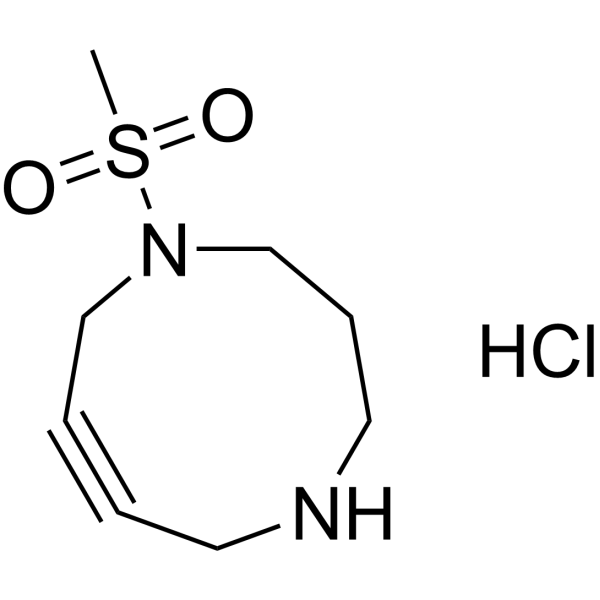 0 ImagesCat. No.: HY-151794CAS No.: 2331322-16-6DACN(Ms) hydrochloride (compound 1ba) is a click chemistry reagent containing cyclononyne alkyne. DCN(Ms) hydrochloride has high thermal stability, chemical stability, water solubility, and high reactivity for cycloaddition reactions.
-
DBCO-PEG4-bis-PEG3-methyltetrazine
 0 ImagesCat. No.: HY-185783CAS No.: 3081272-75-2DBCO-PEG4-bis-PEG3-methyltetrazine is a branched PEG linker consisting of a DBCO group, which reacts with azides via click chemistry, and two methyltetrazine groups, which swiftly react with TCO via click chemistry. Branched design elevates ADC payload capacity.
-
H-(Gly)3-Lys(N3)-OH
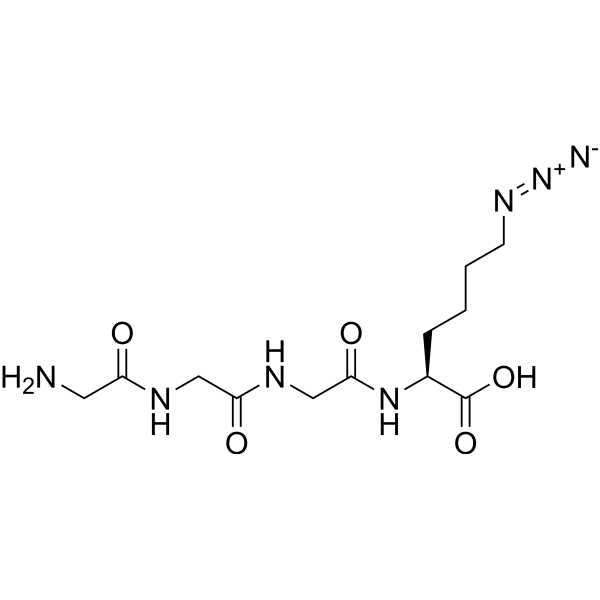 0 ImagesCat. No.: HY-151782CAS No.: 2250437-45-5The azide function is widely used for coupling to alkyne-containing fragments via the renowned Click reaction. Polyglycine fragments containing up to 7 glycines are reported to bind to surfaces and have potential application in nanotechnology constructs: constructs of Gly7-NHCH2-fragment containing peptides bind on mica surface in aqueous solution. It contains an azide group and can undergo copper-catalyzed azide-alkyne cycloaddition (CuAAc) with molecules containing alkyne groups. It can also undergo ring strain-promoted alkyne-azide cycloaddition (SPAAC) with molecules containing DBCO or BCN groups.
-
Trisulfo-Cy3 Methyltetrazine
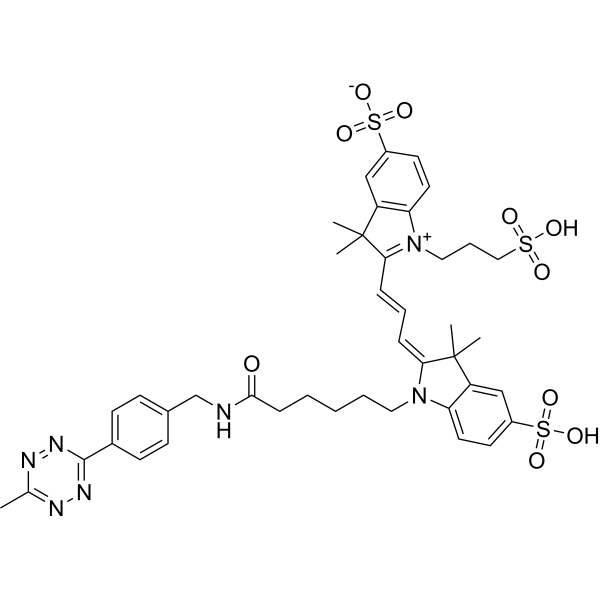 0 ImagesCat. No.: HY-151691CAS No.: 1676067-48-3Trisulfo-Cy3 Methyltetrazine is a click chemistry reagent containing an methyltetrazine group. Methyltetrazine-activated Cy3 probe reacts with TCO-containing compounds via an Inverse-Electron-Demand Diels-Alder reaction to form a stable covalent bond and does not require Cu-catalyst or elevated temperatures.
-
Mal-amide-PEG8-Val-Cit-PAB-OH
 0 ImagesCat. No.: HY-152919CAS No.: 2387738-43-2Mal-amide-PEG8-Val-Cit-PAB-OH is a cleavable ADC linker featuring a maleimide, a hydrophilic PEG spacer, a Val-Cit dipeptide, and a PAB functional group. Maleimide is used to covalently bind free thiols on the cysteine residues of proteins. The Val-Cit dipeptide is cleaved by cellular proteases within the cell to allow for efficient payload delivery with the help of the PAB structure.
-
Arg-Phe-Asp-Ser
 0 ImagesCat. No.: HY-P2376CAS No.: 102567-19-1Arg-Phe-Asp-Ser is a cleavable ADC linker.
-
Propargyl-PEG5-acid (Standard)
 0 ImagesCat. No.: HY-101157RCAS No.: 1245823-51-1Propargyl-PEG5-acid (Standard) is the analytical standard of Propargyl-PEG5-acid (HY-101157). This product is intended for research and analytical applications. Propargyl-PEG5-acid is a non-cleavable 5 unit PEG ADC linker used in the synthesis of antibody-drug conjugates (ADCs). Propargyl-PEG5-acid can used to synthesize ADC inhibitors of Galectin-3. Propargyl-PEG5-acid is a PEG-based PROTAC linker that can be used in the synthesis of PROTACs. Propargyl-PEG5-acid is a click chemistry reagent, it contains an Alkyne group and can undergo copper-catalyzed azide-alkyne cycloaddition (CuAAc) with molecules containing Azide groups.
-
Fmoc-D-Dbu(N3)-OH
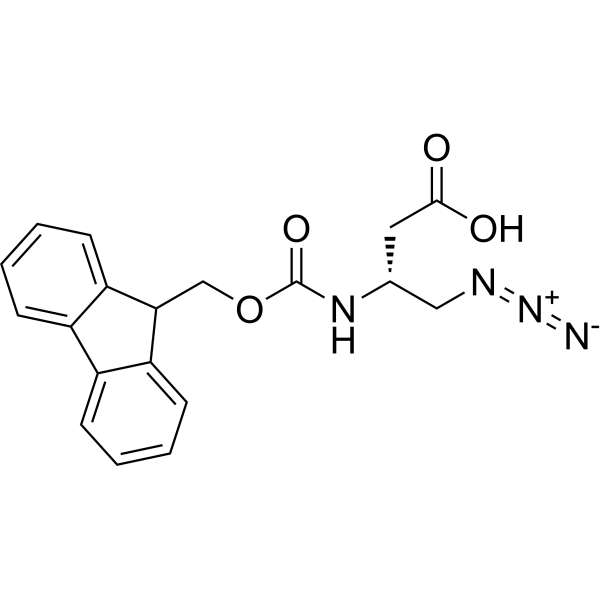 0 ImagesCat. No.: HY-151733CAS No.: 1932023-47-6Fmoc-D-Dbu(N3)-OH is a click chemistry reagent containing an Azide. Fmoc-D-Dbu(N3)-OH is a click chemistry reagent, it contains an Azide group and can undergo copper-catalyzed azide-alkyne cycloaddition reaction (CuAAc) with molecules containing Alkyne groups. It can also undergo strain-promoted alkyne-azide cycloaddition (SPAAC) reactions with molecules containing DBCO or BCN groups.
-
Fmoc-EDA-N3
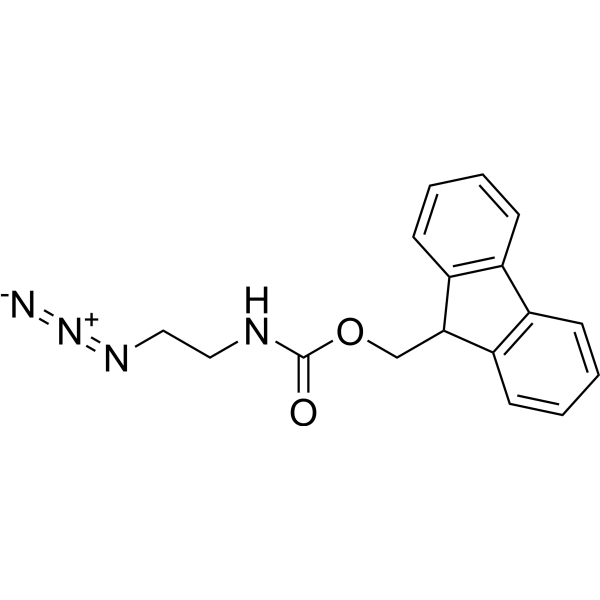 0 ImagesCat. No.: HY-151842CAS No.: 432507-62-5Fmoc-EDA-N3 is a click chemistry reagent containing an azide group. Fmoc-EDA-N3 is a click chemistry reagent, it contains an Azide group and can undergo copper-catalyzed azide-alkyne cycloaddition reaction (CuAAc) with molecules containing Alkyne groups. It can also undergo strain-promoted alkyne-azide cycloaddition (SPAAC) reactions with molecules containing DBCO or BCN groups.



